Today we’re open sourcing engrams, an open-source platform for running coding agents in your own cloud to automate parts of your SDLC.
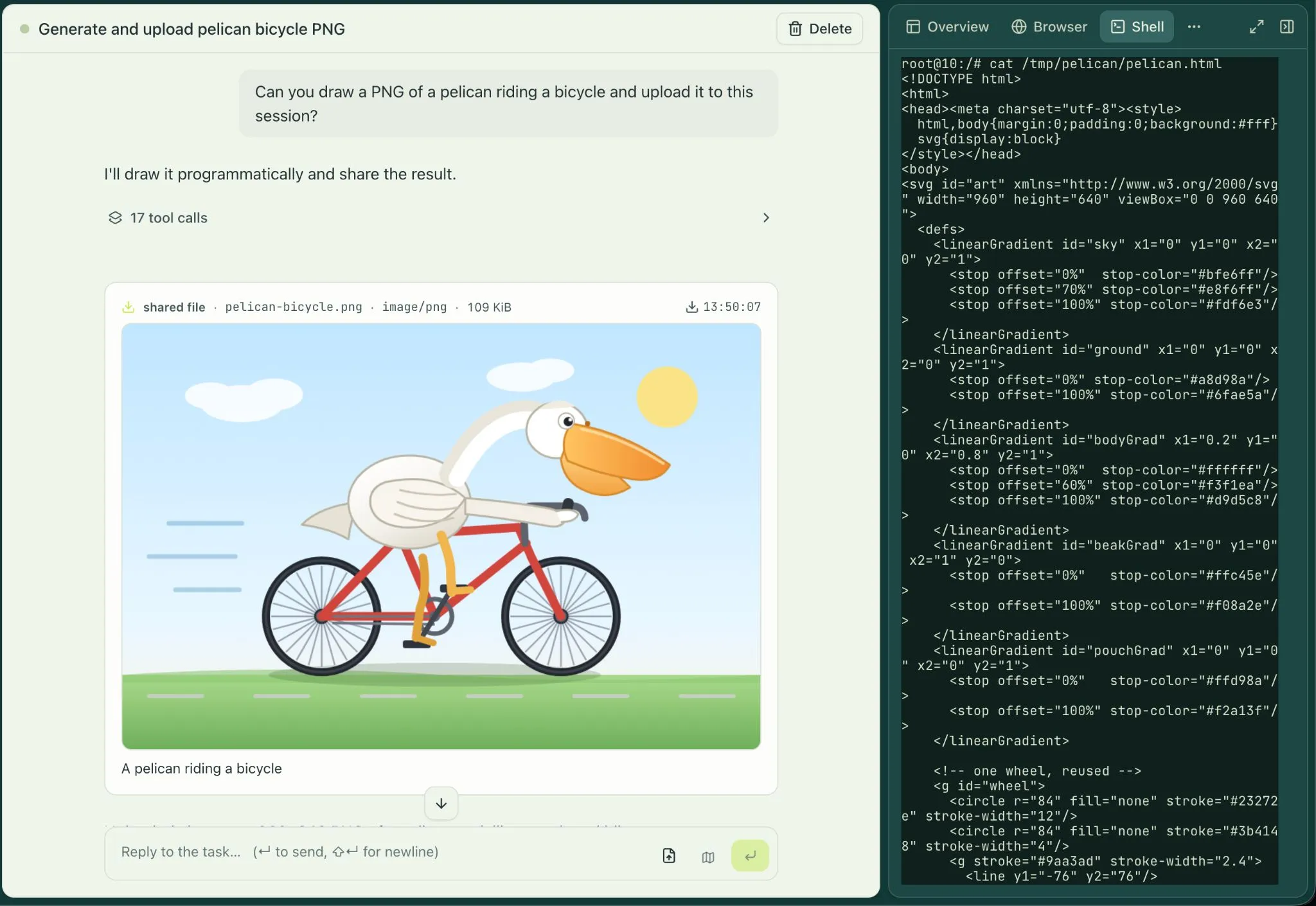
We previously wrote about some of the technical underpinnings of that work, and we’re excited to finally share what we’ve built with the world!
If you want to dive right in, you can get started with our docs, but I’m excited to share how we’ve been using it for the last few months:
Internal Usage
Internally, Cortex engineers use engrams every day to offload Claude Code work to the cloud — either through the UI or through a Slack mention — but we found automations were where cloud agents really shine.
Because engrams supports OpenRouter, we can carefully pick which model makes sense for each workload, to fully optimize cost.
Here are some of the automations running in our engineering org today:
Dependency upgrades and CVE fixes
On a schedule, an agent scans for outdated dependencies and open CVEs. It opens each upgrade, runs the tests, and fixes whatever breaks. Every change gets its own pull request, and the PR review automation reviews it before a human does.
It also knows when to escalate to a human! When an upgrade has a question only a person can answer, such as a runtime jump the test suite doesn’t fully cover, the agent flags it for a human instead of pushing it through.
Memory hot spots
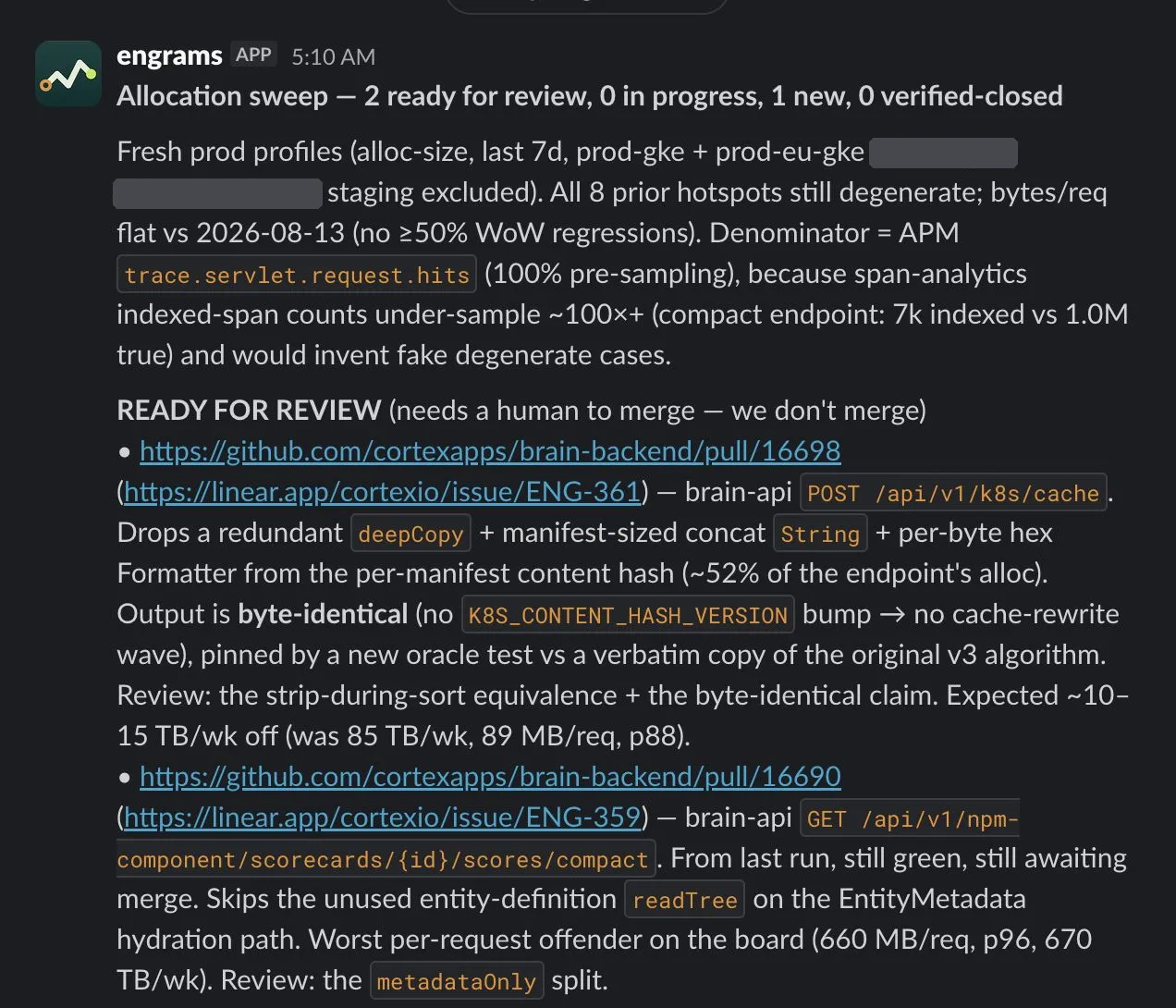
Daily, an agent queries Datadog profiles for the largest allocation frames in production. It opens a task on the service that owns the code and rewrites the hot path. The pull request includes the before and after numbers, so the reviewer can see the payoff.
Bug triage
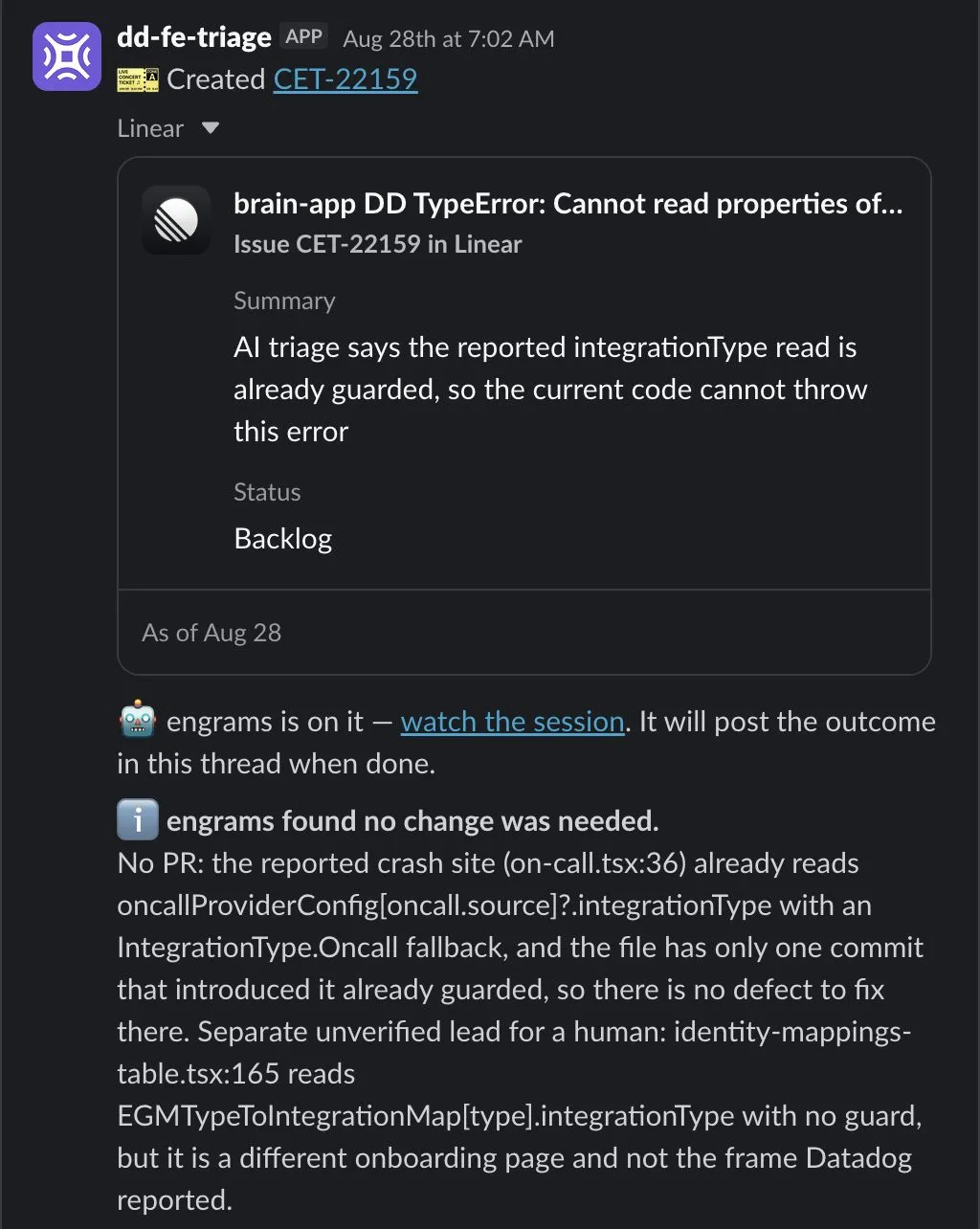
For every new error detected at runtime, the agent reproduces and diagnoses the error, then either pushes a fix or files an issue with the root cause. If the same error fires again, it joins the run already in flight, so work is deduped.
Sometimes with error tracking, they turn out to be just noise (maybe from degenerate Chrome Extension interactions). In that case the agent says so and explains why, rather than opening a PR for the sake of it.
End to end software delivery
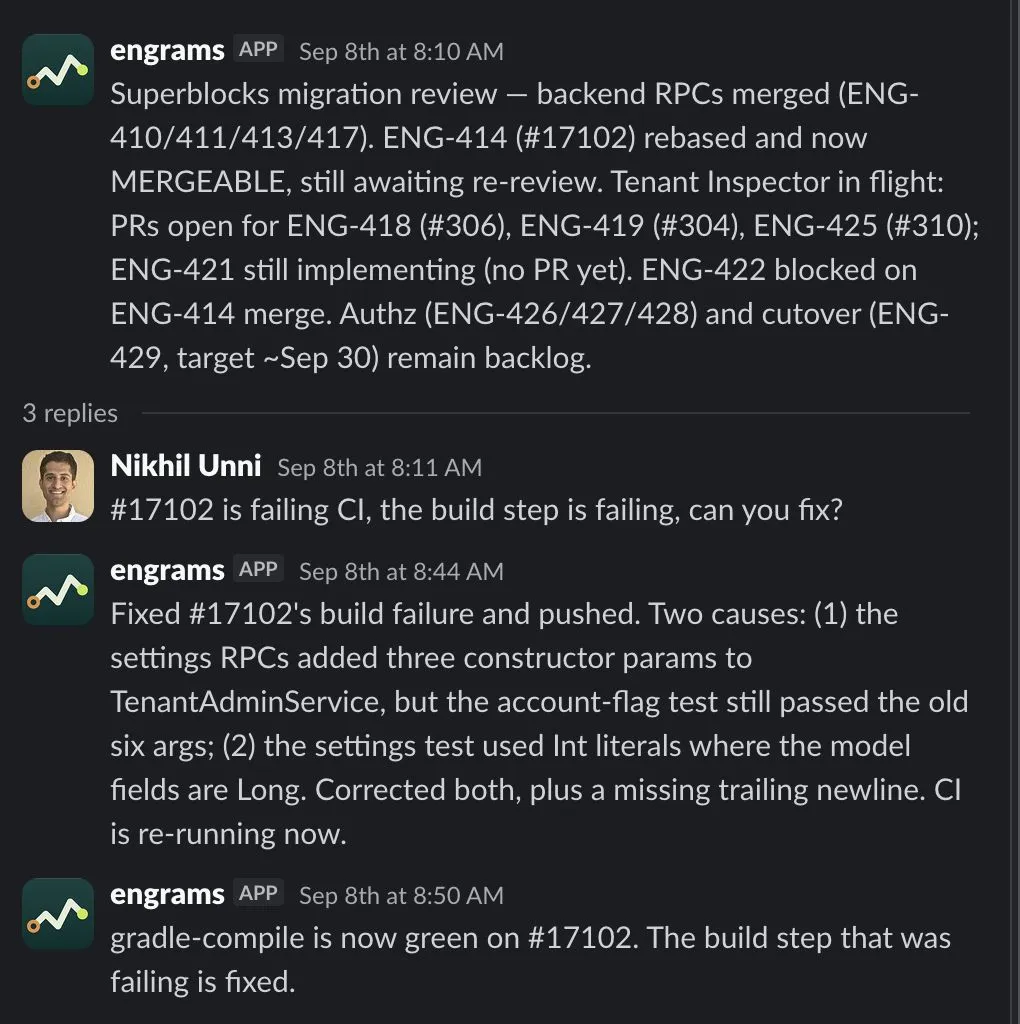
With this we’re experimenting with engrams truly being autonomous: we give it a Linear project to control and a Slack channel for communication with the org, and can it take a project end-to-end on its own.
One long running agent watches a Linear project and owns its Slack channel. It picks up issues, opens pull requests, answers questions in the thread, and posts a daily status update. If someone replies in the thread that a PR is failing CI, the same agent diagnoses the failure, pushes a fix, and reports back when the build is green.
For working on individual tickets, it spawns sub-agents that run in their own microVMs to do the work.
Get started
You can run the whole stack on one machine. From a clone of the repo:
just bootstrap          # writes a local master key (once)
just pull-kernel        # fetches the guest kernel for your machine (once)
just dev                # starts everything
just bake-demo-enable   # builds and enables a demo image
Open the dashboard at http://localhost:5173, add a model key in Settings, and start your first task. The quickstart has the details.
When you’re ready for a shared deployment, follow the GCP or AWS guide.
engrams is 0.x, and APIs will change as we go. We’d love your help shaping it: star the repo, open an issue, or send a PR.